Servant Leadership
Servant leadership is not a philosophy I subscribe to. It's the operating system that runs beneath every team I build, every initiative I lead, and every decision I make. At Successware, engineering grew from 30 to 175+ over my tenure, 80% of it in a single nine-month window - onshore, nearshore, and offshore, with 15+ Senior Managers and Directors reporting in - while retention materially improved: autonomy with accountability is what scaled the platform, not headcount budget.
Being a servant leader means intentionally listening more than I speak. It means creating psychological safety so engineers can propose bold ideas, respectfully challenge the status quo, and recover from failure without fear. I prioritize one-on-ones, not as status updates, but as spaces for mentorship, coaching, and career growth. I view my success through the lens of team success - velocity, code quality, innovation, and, most importantly, the well-being of the people writing the code.
Over the years, I've consistently seen that when engineers feel heard, trusted, and supported, performance soars. It's how I transformed underperforming teams into high-functioning units that take pride in delivering world-class software. I empower through context, not control - providing the 'why' behind every decision so that teams can own the 'how.' This approach doesn't just yield better software; it creates more invested, resilient, and motivated people. And at the end of the day, people build platforms - not the other way around.
Direct Communication and Hard Calls
Servant leadership is not soft leadership. I am direct, plain-spoken, and willing to make the unpopular technical call - sunset a product line, kill a vendor contract, replatform a legacy system, restructure an underperforming team - and stand behind it when challenged by peers, the board, or a customer. Engineers, product partners, and executives get the same answer from me; I do not sand the edges off for the audience. When the data says one thing and the loudest voice in the room says another, the data wins, and I will say so.
Standing behind a decision also means owning the outcome when it does not work. I treat post-mortems as a leadership artifact, not a blame artifact - the team learns faster when the person at the top names what they got wrong first.
AI-Native Engineering Organization
At SteadyIQ I am moving the team from individual AI experimentation to standardized agentic practice - AI as core infrastructure in how software gets built, tested, and shipped, not a productivity bolt-on. QA is learning to generate Playwright automated tests with Claude, and I partner with the CPO on FY27 product strategy so the AI investment tracks the product roadmap instead of running beside it.
The SteadyIQ toolchain is lean and deliberate - Claude Code, GitHub Copilot, and OpenAI GPT-5.6, with GitHub Actions as a first-class pipeline stage for code generation, test synthesis, and architecture scaffolding. It is still multi-model by design: match the tool to the job, and keep the org fluent across more than one vendor rather than taking a single-vendor dependency.
Multi-model is a cost lever, not just an insurance policy. The right model is the cheapest one that clears the bar, and it is usually not the frontier one. At SteadyIQ I partnered with the Data Science team to measure what we were actually consuming and then moved the workloads that did not need a frontier LLM onto low-cost and no-cost models - we were paying 100% for frontier capability and using under 2% of it, and LLM inference cost dropped 90%. Governance is what makes that call possible: you cannot right-size a model you are not measuring. AI governance is not optional - agent SLOs, audit trails, FinOps cost tracking, and responsible adoption with proper safeguards.
None of that is a first attempt. At hc1 I built an AI-native engineering organization from the ground up - not by bolting AI onto existing workflows, but by rethinking how software got built, tested, and shipped. GitHub Actions, Claude Code, Copilot, and AWS Kiro drove code generation, test synthesis, cloud architecture scaffolding, and documentation as first-class CI/CD pipeline stages, on a deliberately multi-model toolchain (Kiro, Claude, Copilot, Gemini, Snowflake Cortex). The org moved from "AI-curious" to "AI-proficient" in deliberate waves - engineering and data first, then DevOps, Integrations, Professional Services, Product, and HR - with prompt throughput tracked as a leading indicator alongside delivery and quality metrics, and hc1's first AI Hackathon with rolling Show & Tell sessions turning individual experiments into shared playbooks. Underneath it sat the AI-governance foundation for a regulated environment: multi-model policies, prompt-use frameworks, and code-assist tool boundaries across the SDLC, with HIPAA and SOC 2 posture intact. The results over that build: 5x deploy frequency, 23% PR throughput gain, code coverage from under 10% to 40%, and a 70% reduction in new-engineer onboarding time. Quality ownership was shared across Engineering, Product, and Services - no dedicated QA team - with Playwright smoke + regression and SonarQube quality gates enforced in CI/CD.
Before hc1, at GlobalMed, I led the company-wide AI Taskforce spanning Engineering, Product, QA, Operations, HR, and Finance, built an enterprise AI literacy program that made every employee "AI-capable" as a baseline competency, and stood up a Confluence AI Knowledge Hub, cross-functional Innovation Sprints, and a shared Prompt Library that surfaced production-ready workflows from frontline staff. I pioneered Claude Code adoption there in May 2025 - authoring the guardrails, usage policies, and decision frameworks for AI coding assistants in regulated delivery - added OpenAI Codex in June 2025 as a complementary tool, and ran Tuesday Technical Talks codifying when to use which. Time-to-productive for new developers dropped 35%. The pattern goes back further still: at Successware (2021-2024) I pushed offshore partners onto generative AI for DevOps automation, performance-test generation, MVP scaffolding, and synthetic user creation - a measurable productivity multiplier across vendors before it was fashionable.
At hc1 I also partnered with the CPO on greenfield agentic AI, and both products shipped. Source IQ was an agentic supply chain intelligence platform combining contract performance with utilization analytics on Python FastAPI and vLLM (Qwen3.6-27B). Clinical IQ was a clinical intelligence SaaS with direct Epic EMR integration via HL7/FHIR on HIPAA-compliant AWS, surfacing AI-detected patterns and lab/test recommendations to close care gaps. That work put MCP (Model Context Protocol) into production AI integration, the A2A Protocol into multi-agent communication, and context-as-infrastructure methodology into practice with AGENTS.md and CLAUDE.md files.
My focus is improving Developer Experience and reducing flow friction. Whether accelerating MVP development, using AI for smarter testing, or auto-generating documentation, the goal is the same: ship smarter, not just faster. Read more about my AI Philosophy at RJL.ai.
Private Equity & High-Growth Leadership
I have led technology organizations within PE-backed companies where speed, efficiency, and measurable value creation are non-negotiable. My experience includes post-acquisition technology assessments using 30-60 day evaluation frameworks, building value creation roadmaps tied to EBITDA impact, and delivering board-ready reporting that connects engineering investment to business outcomes. I understand the PE playbook: reduce cost, increase velocity, de-risk the platform, and position the technology org as a value driver - not a cost center. From M&A due diligence to exit readiness, I bring the strategic and operational rigor that PE-backed environments demand.
Product Management Partnership
I don't just partner with product management - I challenge and elevate it. Too often engineering is treated as a delivery mechanism, handed a list of features and told to execute. I reject that model. When I sit down with product leaders, I don't ask, "What do you need built?" I ask, "What problem are we solving, for whom, and why now?" That question resets the dynamic.
Through this model, we prioritize with purpose - vetting ideas through business value, technical feasibility, and user impact. Engineering moves upstream into product discovery; product joins sprint reviews. Shared accountability. We make space for experimentation, rapid prototyping, and feedback loops to validate hypotheses before committing engineering resources.
Strategic Insight
Vision tied to outcomes. At Successware, I presented architecture and investment cases directly to PE advisors, investors, and the C-suite; secured approval and offshore investment for a React Native mobile platform delivered on schedule and within budget. The same platform drove FinTech revenue expansion through GraphQL and AI-enabled APIs that accelerated merchant onboarding and unlocked new integration partnerships - engineering investment that showed up as revenue, not just velocity.
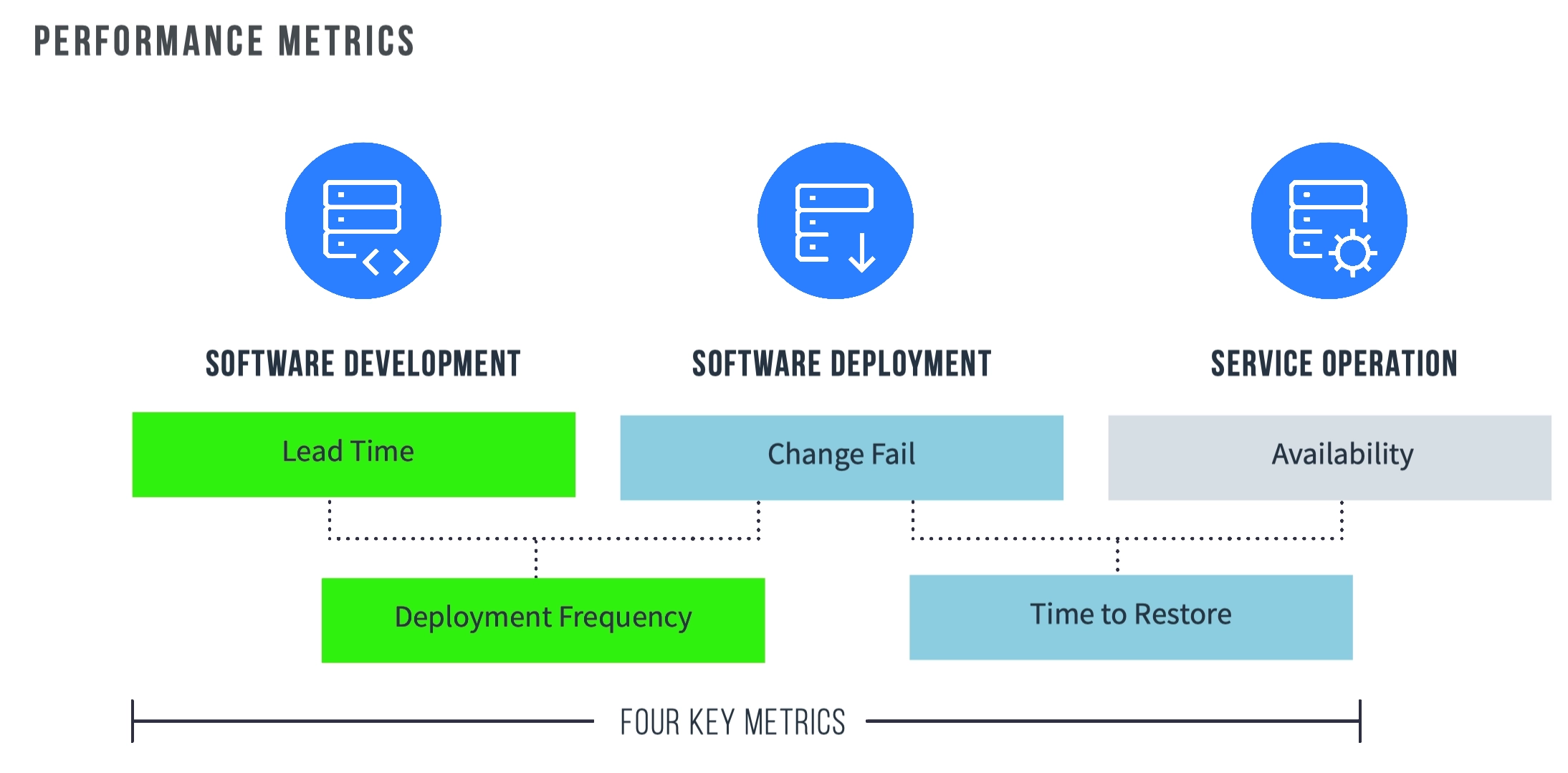
Distributed by design. Hybrid teams since 2006 and fully distributed global teams since 2012 - at Follett that meant four US sites (McHenry, IL; Greenville, SC; Minneapolis, MN; Hingham, MA) plus offshore engineers in India, before distributed work was the default. Onshore, nearshore, and offshore since, with attention to cultural nuance and operational cadence across time zones, not just calendar overlap, under a single delivery model that cut hand-off friction and unified mobile, data, and backend telemetry. At Successware, MTTR dropped 30% under unified Datadog/Splunk standards.
Quality and reliability as non-negotiables. Every initiative measured against SLA. Successware ran at sub-second response for 10k+ concurrent users at 99.95% SLA; hc1 went from reactive firefighting to executive-visible CloudWatch + PagerDuty + Grafana dashboards delivering uptime and platform health metrics for the first time.
Modernization without downtime. At DebtPayPro, I led a zero-downtime data center to AWS migration (EC2, MariaDB) that coordinated 30+ vendor, payment-gateway, and finance integrations with no business disruption. At GlobalMed, the .NET 8 platform rebuild and Azure cloud modernization retired 65% of technical debt while the product kept serving the VA and the White House Medical Unit. The platform keeps running while it is being replaced - that is the whole discipline.
Player-Coach
I refuse to step entirely away from the keyboard. I still spin up local dev servers, write vanilla JavaScript, build my own utilities, and prototype solutions alongside my teams. This is not nostalgia - it is how I maintain the technical credibility that earns respect from senior engineers and architects. Leaders who collaborate directly with developers are better equipped to anticipate risks, bottlenecks, and quality concerns before they escalate. I can review a complex pull request in the morning and present a budget proposal to the board in the afternoon.
Player-coach for me means PR review, architectural review, platform modernization, and process design - not 50% feature delivery. I will code up to 30% when the work calls for it. I am past the career stage where coding tests are useful screening signal.
Deep Technical Expertise
Even when my title says Director or VP, my function often mirrors a Chief Architect. I possess the broad technical vocabulary required to design an entire ecosystem - conceptualizing how a modern frontend, a legacy backend, and a new AI prompt library will communicate, then guiding the specialists who write the bulk of the code. My expertise spans cloud-native architectures, distributed systems, data security, and full-stack SaaS development. At hc1 I led the AWS-partnership build for the Epic EMR integration and served as an early-adopter design partner for AWS Kiro pre-GA - bringing external partner muscle and pre-GA tooling into the platform roadmap. At SteadyIQ I own the architecture of the legacy .NET to TypeScript/Node/Python monorepo rewrite, which I am driving to feature parity while the legacy application keeps serving state agencies in production.
Pragmatic Technologist
13 years as an IC and 20+ years of leadership across GovTech, FinTech, HealthTech, and EdTech - all regulated B2B SaaS - long enough to have survived enough hype cycles to know that the right tool for the job is the only sustainable approach. I am language-agnostic by necessity and by conviction. I care about the business outcome, the system architecture, and the deployment strategy far more than being dogmatic about a specific programming language or framework. When you combine this philosophy with executive responsibilities and a deep focus on artificial intelligence, you get someone who does not just manage teams - I understand how to orchestrate AI tools, evaluate emerging platforms, and make pragmatic build-versus-buy decisions that stand up to scrutiny. Every technology choice I make is grounded in what ships, what scales, and what the business actually needs.
 Summary
 Professional Experience


 What I'm Built For
 Leadership Profile
 Key Capabilities
 Measuring the Success of Engineering Teams